Skip to content
Repairs and Service

Home Aircon Regas and Refrigerant Leak Repair Melbourne

Home aircon regas and refrigerant leak repair across Melbourne for split systems, multi-splits and ducted reverse cycle air conditioners. A home system is sealed, so if it's low on gas, there's a leak. Topping it up without fixing the leak just means paying for the same gas again in a few weeks. Our ARCtick-licensed technicians find the leak, repair it, pressure-test the system and then regas it to the right charge, with a fixed quote before any work starts.

  • Free fixed quote before any work
  • Licensed gas and refrigerant techs
  • Every Melbourne suburb
  • Licensed Technicians
  • 24/7 Emergency Callouts
  • Upfront Fixed Pricing
  • All Melbourne Suburbs
  • Same-Day Repairs

Common signs

Signs your aircon is low on gas

  • Blowing air but not cooling or heating well
  • Ice on the copper pipes or indoor coil
  • Takes much longer to reach temperature
  • Hissing or bubbling near the pipes
  • Low refrigerant error code
  • Oily mark around a pipe joint

Before you call, clean the filters and check the outdoor unit isn't blocked. A dirty filter can cause the same symptoms as low gas. If there's ice on the pipes, switch the system off and let it thaw.

Why low gas always means an aircon gas leak

Unlike a car air conditioner, a home system doesn't lose gas through normal use. The refrigerant circulates in a sealed loop between the indoor and outdoor units for the life of the system. If the charge is low, it has escaped through a leak.

The most common leak points are the flare joints where the pipes connect to the units, corroded copper in the indoor or outdoor coil, pipes rubbed through by vibration, and joints disturbed during renovations or when a system was moved. Leaks are often slow, so a system can lose cooling gradually over a summer or two before anyone notices.
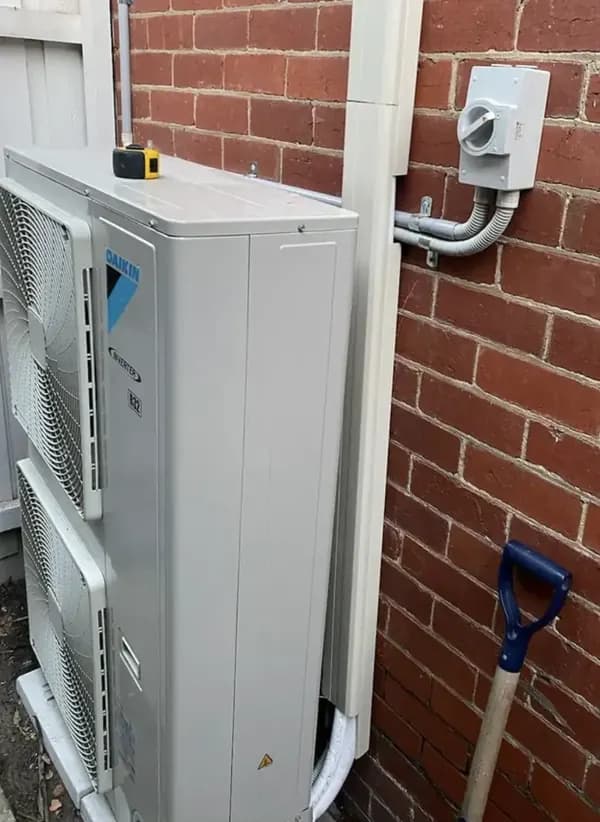
Daikin air conditioner outdoor unit beside a brick wall in a Melbourne home, with the isolator switch and refrigerant pipes
A Daikin outdoor unit. The flare joints where the pipes connect behind the side cover are a common leak point.
Common refrigerant leak points, signs and the usual repair
Leak pointCommon signsUsual repair
Flare joints at the unitsOily mark at the joint, slow loss of coolingRe-flare or replace the joint
Indoor coilIce on the coil, hissing inside the unitRepair the coil or replace it
Outdoor coilOily patch on the fins, corrosionRepair the coil or replace it
Pipe run in the wall or roofLeak not found at the unitsPressure-test and repair or re-run the pipe
Service valveLeak at the valve capsReplace the valve core or caps

How we repair the leak and regas

We confirm the system is low with gauges and temperature readings, then find the leak with an electronic detector and bubble tests. Once the leak is repaired, we pressure-test the system with nitrogen to prove it holds, pull a deep vacuum to remove air and moisture, and recharge it with the correct type and amount of refrigerant for that model.

Finally, we run the system and check pressures, temperatures and airflow so you know it's cooling and heating as it should. Any refrigerant removed is recovered, never vented.

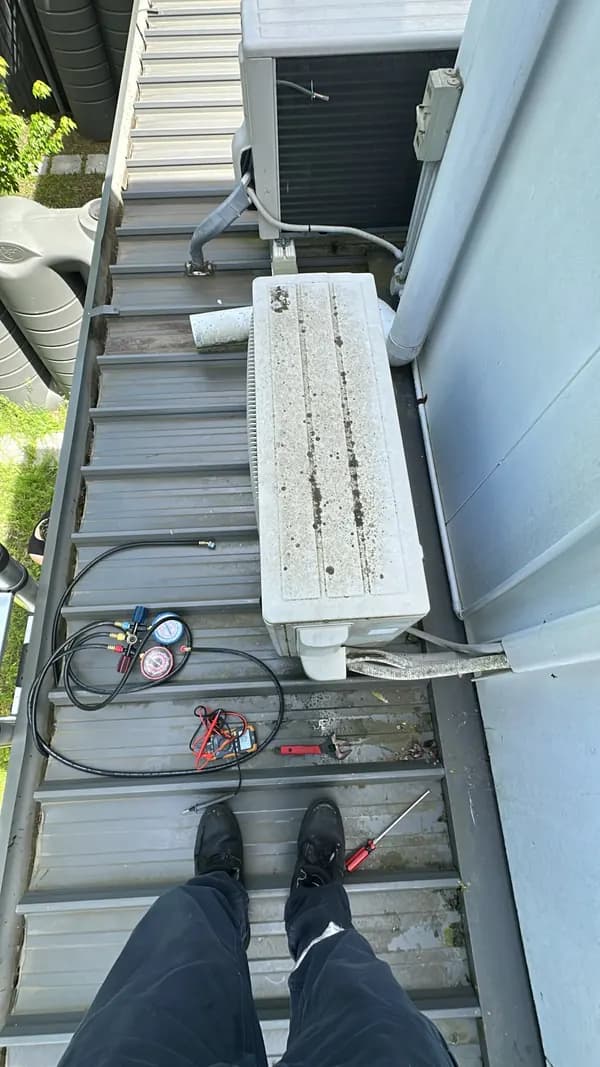
Pressure gauges connected to an outdoor unit on an apartment balcony
Gauges connected on a balcony unit to check the pressures before and after the repair.
  • Low charge confirmed with gauges and temperature readings
  • Leak found with an electronic detector and bubble tests
  • Leak repaired: joints re-flared, coils or valves repaired or replaced
  • Nitrogen pressure test to prove the repair holds
  • Deep vacuum to remove air and moisture
  • Recharged to the manufacturer's specified amount

What affects the cost of a regas

Most of the cost is in finding and fixing the leak, not the gas itself. A leak at an accessible flare joint is quicker to repair than one inside a coil or in a pipe run behind a wall. The type of refrigerant (R32, R410A or the older R22) and the size of the system set how much gas is needed.

We find the leak first and give you a fixed quote for the repair and regas before we start. If a coil has failed on an older system, we'll tell you whether the repair is worth it.

Why choose us

Why choose us for an aircon regas

Leak found and fixed first, so you only pay for the gas once.

ARCtick-Licensed

Every refrigerant job done by ARCtick-licensed technicians.

Leak Fixed First

We don't just top up the gas. We find the leak and repair it.

Tested Before We Leave

Pressure, vacuum and performance checks on every regas.

How it works

Sorted in four simple steps

No run-around and no surprises, from your first call to a system that works again.

  1. Step 1

    Call or book online

    Tell us what's wrong. Call 0405 133 761 any hour, or book online in a minute.

  2. Step 2

    We come to you

    A licensed technician arrives when we say, with parts for the major brands on board.

  3. Step 3

    Fixed quote first

    We find the fault and you approve the price before any work starts. No call-out fee.

  4. Step 4

    Fixed and tested

    We test the system, tidy up and explain what we did, backed by our 100% satisfaction guarantee.

Heater died? Aircon blowing warm? Don't wait it out.

Melbourne weather doesn't wait — neither do we. Day or night, a licensed technician is one call away.

FAQ

Frequently asked questions

Common questions about regassing a home air conditioner.

Not as routine maintenance. A home system is sealed, so the gas doesn't get used up. If it's low on gas, there's a leak somewhere, and the leak needs to be found and repaired before the system is regassed.

Get your free quote in minutes

Tell us what you need and we'll come back with an upfront fixed price — usually the same day. No obligation, no pushy sales.

Prefer to talk?0405 133 761— 24/7

Your details stay with us — never shared.