Skip to content
Guide

Is Ducted Heating Gas or Electric?

Ducted heating can be either. In most established Melbourne homes it's gas: a gas-fired heater in the roof, under the floor or on an outside wall warms air and blows it through ducts to each room. Electric ducted heating is a reverse cycle ducted air conditioner, which pulls heat in from outside and also cools in summer. This guide shows you how to tell which one you have, how the two compare, and what each needs to keep running safely.

  • Free fixed quote before any work
  • Licensed gas and refrigerant techs
  • Every Melbourne suburb
  • Licensed Technicians
  • 24/7 Emergency Callouts
  • Upfront Fixed Pricing
  • All Melbourne Suburbs
  • Same-Day Repairs

Quick check

Signs your ducted heating runs on gas

  • A metal flue pipe pokes out of the roof or wall
  • A gas meter is connected and gets used in winter
  • Floor vents rather than ceiling outlets
  • No outdoor unit that hums when the heat is on
  • A Brivis, Braemar, Rinnai or Bonaire controller
  • A service sticker mentioning a CO test

Still not sure? Send us a photo of your wall controller and the unit in the roof, and we'll tell you.

How gas ducted heating works

A gas ducted heater burns natural gas or LPG inside a sealed heat exchanger. A fan pushes household air across the outside of that exchanger, the air warms up, and the ducts carry it to vents in each room. The combustion gases never touch the air you breathe; they leave through a flue to the outside.

That sealed exchanger is why servicing matters. As heaters age, an exchanger can crack, and a cracked one can let carbon monoxide into the airflow. A proper service checks it and includes a carbon monoxide test.
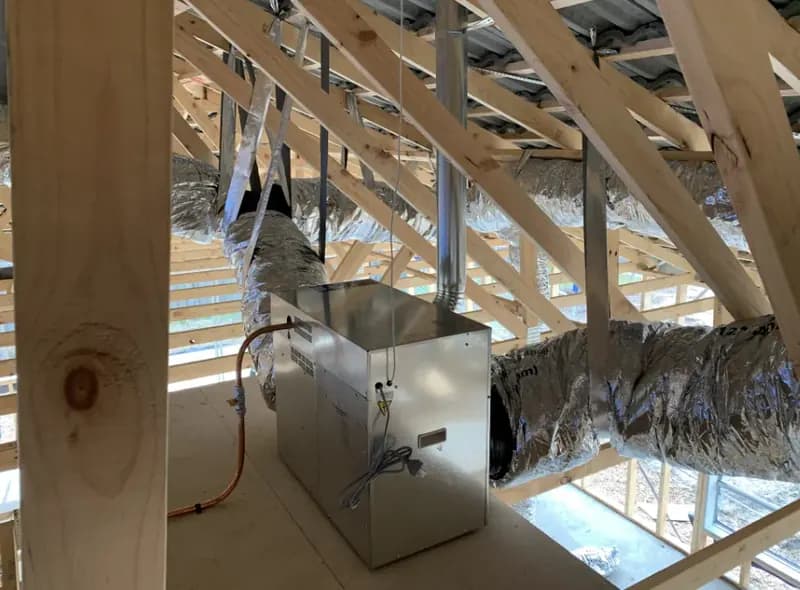
Gas ducted heater in a roof space with insulated ducts running out to the rooms
A gas ducted heater in the roof. The flue takes combustion gases outside and the ducts carry warm air to each room.

How reverse cycle ducted works

A reverse cycle ducted system is an air conditioner run backwards in winter. The outdoor unit pulls heat out of the outside air, even on a cold day, and a refrigerant circuit carries it to an indoor unit in the roof. A fan then sends the warm air through ducts, usually to ceiling outlets. In summer the same system runs the other way and cools the house.

There is no flame, flue or gas line, so there is no carbon monoxide risk. The trade-off is that heating output falls as the outside temperature drops, which is why sizing a system for Melbourne's coldest mornings matters.

Gas vs reverse cycle ducted at a glance

Neither is better for every home. This is how the two usually compare in a Melbourne house.

Gas ducted heating compared with reverse cycle ducted
Gas ducted heatingReverse cycle ducted
Heat sourceBurns gas in a sealed heat exchangerMoves heat in from outside with refrigerant
CoolingNo, unless add-on cooling is fittedYes, the same system cools
OutletsOften floor vents in older homesUsually ceiling outlets
Feel of the heatVery warm air, heats up fastGentler, steadier warm air
Running cost depends onGas tariff, heater star rating, insulationElectricity tariff, solar panels, system efficiency, insulation
Safety checksHeat exchanger, flue and carbon monoxide testElectrical and refrigerant checks
ServicingAt least every two yearsEvery year

Which suits your home?

If you already have gas ducted heating that works well and the ducts are in good shape, keeping it serviced is usually the simplest choice, and add-on cooling can be an option. If you want heating and cooling from one system, have solar panels, or are moving away from gas, reverse cycle ducted is worth a look.

If your gas heater is old, keeps breaking down or fails a safety check, that's the time to compare both properly. We repair before we replace, and we'll tell you plainly whether a repair is worth doing.

  • Keep gas ducted: working heater, good ducts, mainly need heating
  • Add cooling to gas: heater suits add-on cooling and you want summer comfort
  • Go reverse cycle: you want heating and cooling in one, have solar, or are leaving gas

Heater died? Aircon blowing warm? Don't wait it out.

Melbourne weather doesn't wait — neither do we. Day or night, a licensed technician is one call away.

FAQ

Frequently asked questions

Everything Melbourne homeowners ask us about heating, cooling and hot water: servicing, safety and costs. Can't find your answer? We're one call away.

Often, yes. An add-on cooling coil can sit on top of many gas ducted heaters and share the same ducts, with an outdoor unit added outside. Whether it suits your home depends on the heater model, the duct sizes and where the outdoor unit can go, so a technician needs to look first.

Get your free quote in minutes

Tell us what you need and we'll come back with an upfront fixed price — usually the same day. No obligation, no pushy sales.

Prefer to talk?0405 133 761— 24/7

Your details stay with us — never shared.