Skip to content
Guide

Ducted vs Split System Air Conditioning: Which Is Better?

Neither is better for every home. Ducted vs split comes down to how many rooms you want to heat and cool, the shape of your house and how you live in it. A ducted system hides one large unit in the roof and feeds every room through ceiling outlets, with zones to switch areas on and off. Split systems put a wall unit in each room you choose, each with its own outdoor unit or sharing one. We service and repair both kinds in homes all over Melbourne, and below is how they compare in the houses we see every week.

  • Free fixed quote before any work
  • Licensed gas and refrigerant techs
  • Every Melbourne suburb
  • Licensed Technicians
  • 24/7 Emergency Callouts
  • Upfront Fixed Pricing
  • All Melbourne Suburbs
  • Same-Day Repairs

Quick answer

Which one usually fits

  • Single-storey house with roof space: ducted works well
  • Apartment or unit with no roof space: split systems
  • Only two or three rooms used in summer: split systems
  • Want nothing on the walls and quiet rooms: ducted
  • Cooling the whole house most days: zoned ducted
  • Existing gas ducted heating: compare add-on cooling first

Unsure? Tell us your house type, number of rooms and what you have now, and we'll talk you through it.

How ducted air conditioning works

A ducted reverse cycle system has one indoor unit, usually lying in the roof space, and one outdoor unit. Air is drawn back through a large return air grille in the hallway, passes over the coil, and is pushed through insulated flexible ducts to an outlet in the ceiling of each room. In winter the same system heats.

Most systems are split into zones, for example living areas and bedrooms, with a motorised damper on each zone's duct. You turn zones on and off from a wall controller or an app, so you are not cooling empty bedrooms in the afternoon or the lounge at night.
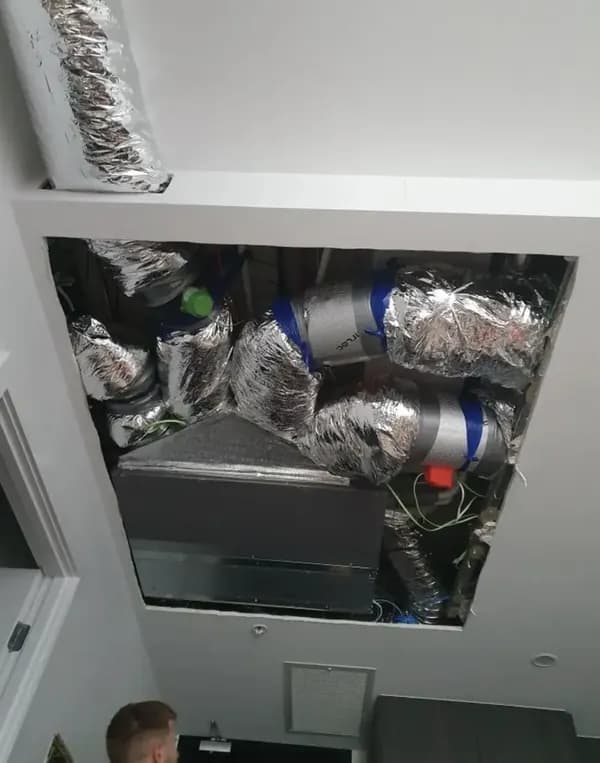
Insulated ducts and zone motors for a ducted air conditioner inside a roof space
Ducts and zone motors in the roof. Each motor opens or closes the duct to one zone of the house.

How split system air conditioning works

A split system pairs a wall-mounted indoor unit with an outdoor unit, joined by refrigerant pipes and a cable through the wall. Each one heats or cools the room it's in, and you control it with its own remote. Larger homes often end up with three or four, one per living area and main bedroom.

A multi-head split runs several indoor units from one outdoor unit. It saves wall space outside, but every room relies on that one outdoor unit, and the indoor units usually can't run one in heating and another in cooling at the same time.

Ducted vs split system at a glance

This is how the two usually compare in a Melbourne house. Upfront cost depends heavily on the home, so we quote each one on site rather than guess.

Ducted air conditioning compared with split systems
DuctedSplit systems
Rooms coveredThe whole house, in zonesOne room per indoor unit
LooksCeiling outlets and one return grilleA wall unit in each room
Noise in the roomVery low, just air movementLow, but you hear the fan change
Running costSimilar to splits when cooling most rooms, if zonedLowest when you only need one or two rooms
NeedsRoof space and ceiling accessAn outside wall and a spot for each outdoor unit
If it breaks downThe whole house is without coolingOnly that room is affected
ServicingReturn filter, roof unit, drain, zones and ductsEach indoor head, drain and outdoor unit

Which suits your Melbourne home?

The single-storey brick veneer homes common in the south-east and east, with an easy roof space, are well suited to ducted. Double-storey homes are trickier: upstairs bedrooms sit far from a single roof unit, so they often need a second system, careful zoning, or splits for the top floor.

Apartments and many townhouses have no roof space for ducts and strict rules about outdoor units, which makes split systems the practical choice. Victorian and Edwardian homes with high ceilings and heritage features can take ducted through the roof, but many owners prefer splits in the two or three rooms they actually use. If you already have gas ducted heating, our guide on whether ducted heating is gas or electric explains the options for adding cooling.

  • Choose ducted if you want the whole house comfortable, quiet rooms and clear walls
  • Choose split systems if you only need a few rooms, or have no roof space
  • Mix both when an extension, studio or upstairs room is hard to reach with ducts
  • Whatever you have, an annual service keeps either type efficient

Heater died? Aircon blowing warm? Don't wait it out.

Melbourne weather doesn't wait — neither do we. Day or night, a licensed technician is one call away.

FAQ

Frequently asked questions

Everything Melbourne homeowners ask us about heating, cooling and hot water: servicing, safety and costs. Can't find your answer? We're one call away.

It depends on how many rooms you condition. Cooling one or two rooms is cheaper with split systems, because you only run what you're in. Cooling most of the house is often about even, and a zoned ducted system closes off empty rooms so it isn't cooling the whole roof's worth of ducts all day.

Get your free quote in minutes

Tell us what you need and we'll come back with an upfront fixed price — usually the same day. No obligation, no pushy sales.

Prefer to talk?0405 133 761— 24/7

Your details stay with us — never shared.