Skip to content
Guide

Air Conditioner Dry Mode: What It Does and When to Use It

Air conditioner dry mode, the water drop symbol on your remote, takes moisture out of the air rather than chasing a set temperature. The indoor fan runs slowly and the compressor cycles on and off, so the coil stays cold enough to pull water from the room without blasting it with cold air. In Melbourne that makes it the right setting for the muggy, overcast days of late summer and the damp stretch after a storm, and the wrong one for a 38-degree northerly. Here's how dry mode works, how it compares with cool mode, and when to use it.

  • Free fixed quote before any work
  • Licensed gas and refrigerant techs
  • Every Melbourne suburb
  • Licensed Technicians
  • 24/7 Emergency Callouts
  • Upfront Fixed Pricing
  • All Melbourne Suburbs
  • Same-Day Repairs

Quick answer

When dry mode is the better choice

  • Warm, sticky days when the air feels heavy
  • Rainy or stormy days with the house shut up
  • Mild days when you want less damp, not much colder
  • Muggy nights when a cold draught keeps you awake
  • A stuffy room that smells damp after wet weather
  • Not for hot, dry northerly days: use cool mode

Rule of thumb: if the problem is the heat, use cool. If it's the stickiness, use dry.

What does dry mode do?

Every air conditioner dehumidifies a little when it cools. Warm room air passes over the cold indoor coil, the moisture in it condenses like water on a cold glass, and it runs into a tray and out through the drain hose. Dry mode simply makes that the main job.

To do it, the unit slows the indoor fan right down so air spends longer over the coil, and it runs the compressor in short bursts instead of flat out. The result is air that is noticeably drier and a little cooler, with far less draught than cool mode. Most remotes show it as a water drop, the word DRY, or both. Daikin, Mitsubishi Electric, Fujitsu and Panasonic all use a version of the drop.
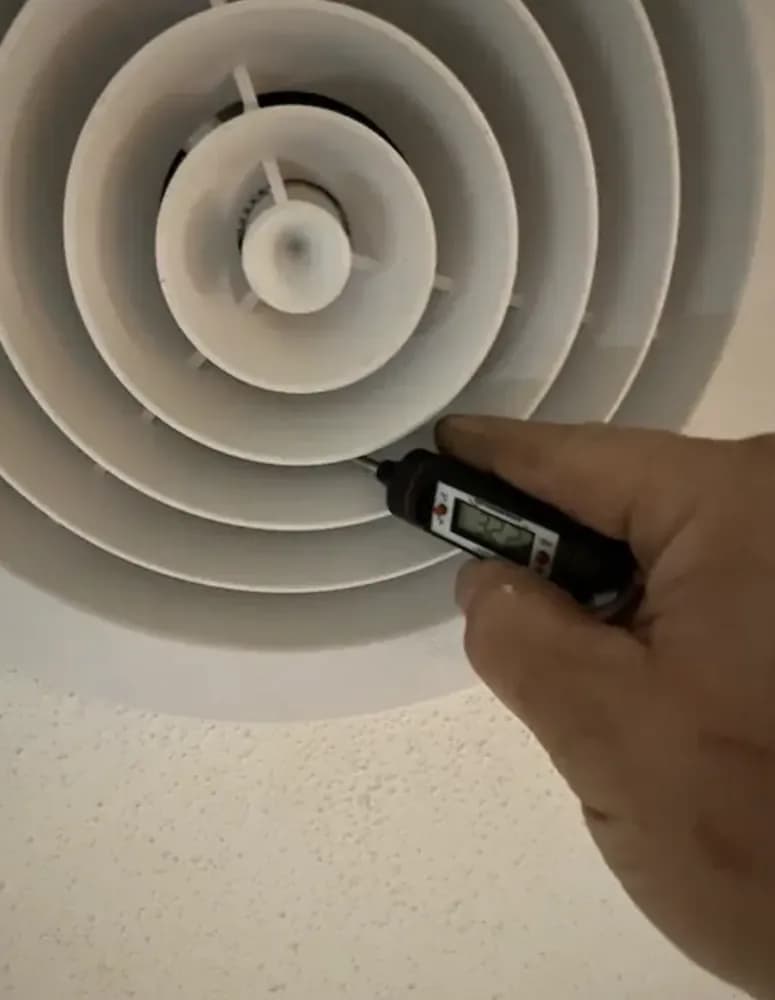
Technician measuring air temperature at an air conditioner ceiling outlet
Checking outlet air on a service. In dry mode the air comes out cool but gently, because the fan is held on low.

Dry mode vs cool mode

The two modes use the same parts. The difference is what the system is trying to control.

Air conditioner dry mode compared with cool mode
Dry modeCool mode
Main goalLower the humidityReach the set temperature
Indoor fanLow, often lockedAny speed you choose
CompressorShort on and off cyclesRuns until the room is at temperature
How the room feelsLess sticky, slightly coolerColder, with more air movement
Best Melbourne weatherHumid, overcast or wet daysHot days, especially dry northerlies
Power useUsually lower on humid daysHigher, but cools far faster

When to use dry mode in Melbourne

Melbourne's hottest days are usually dry ones, when a northerly pushes in desert air. Dry mode can't do much then because there is little moisture to take out. Where it earns its place is the other kind of summer day: grey, warm and close, often in February and March, or the heavy, still evening after a thunderstorm. Taking the moisture out lets your sweat evaporate again, so the room feels comfortable at a higher temperature.

It also helps in the shoulder seasons. A closed-up house after a week of rain can feel clammy without being hot, and an hour of dry mode clears it without chilling everyone. Keep doors and windows shut while it runs, or it will just keep drying the street.

  • Use dry mode for stickiness, cool mode for heat
  • Shut windows and doors while it runs
  • Run it for a few hours rather than all day; once the air feels dry, switch to fan or off
  • Don't use it on a cold day: it cools the room, it never heats it

Getting the most from dry mode

Dry mode depends on a cold, clean coil and a clear drain. A clogged filter cuts airflow so the coil can ice up, and a dirty coil grows mould faster because it stays wet longer. Clean the filters every few weeks in summer and have the unit serviced once a year, ideally in spring.

Watch the water too. Dry mode can pull litres out of the air on a humid day, and every drop has to leave through the drain. If water drips from the indoor unit, or the room starts smelling musty, the drain or tray needs attention. Our technicians clear drains, clean coils and check the controls on every service, across all Melbourne suburbs.

If dry mode never seems to switch on, or the unit ices up or leaks whenever you use it, book a check. These usually point to a low refrigerant charge, a dirty coil or a blocked drain, and all three are cheaper to fix early.

Heater died? Aircon blowing warm? Don't wait it out.

Melbourne weather doesn't wait — neither do we. Day or night, a licensed technician is one call away.

FAQ

Frequently asked questions

Everything Melbourne homeowners ask us about heating, cooling and hot water: servicing, safety and costs. Can't find your answer? We're one call away.

On a humid day it usually is, because the compressor runs in short bursts and the indoor fan stays on low. On a hot, dry Melbourne day dry mode has little moisture to remove and won't bring the temperature down far, so cool mode is the better use of power.

Get your free quote in minutes

Tell us what you need and we'll come back with an upfront fixed price — usually the same day. No obligation, no pushy sales.

Prefer to talk?0405 133 761— 24/7

Your details stay with us — never shared.